
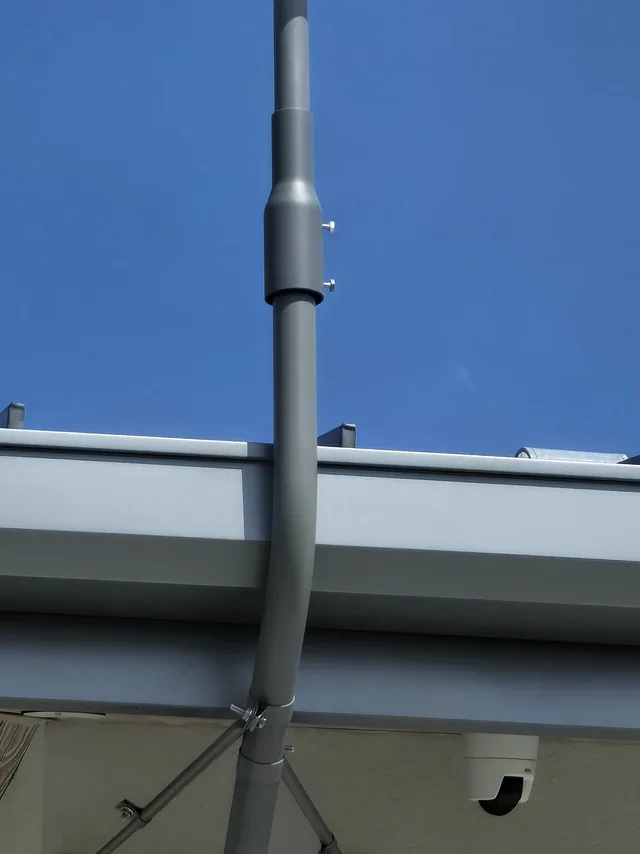
Surveillance built around the property
A camera system earns its keep twice: once by making a break-in or a dumped pallet less likely, and again when something does happen and the footage is clear enough to use. We install systems that do both, with cameras placed for the shots you will actually need rather than the number that comes in the box.
The system is designed around the property’s layout and security needs, whether that is a storefront in Winter Garden, a warehouse in Ocoee or a multi-building site in Orlando.
What we install:
- On-premise and hosted camera systems
- Analog, IP-based and digital camera systems
- Wireless camera systems with video transmission over wireless networks
- Indoor and outdoor cameras for both residential and commercial properties
- 360-degree and PTZ (pan-tilt-zoom) cameras for wide-area coverage
- Remote viewing capabilities for real-time monitoring from anywhere
What you can check before you call
- Licensed Florida low-voltage contractor, FL License #ES12001608: verify it on the Florida DBPR licensee search
- Free on-site assessment before any quote
- Based in Central Florida, with an office in Sanford
Cameras are one layer of the system
A camera is only as dependable as what it is plugged into. We run the structured cabling that feeds the cameras and the recorder, and where a cable run is not practical we carry the video over a wireless link built as part of your business WiFi. Sites that want to know who opened a door as well as what happened in front of it pair the cameras with access control and automation, so the two systems are specified together instead of retrofitted to each other later.
Common questions about commercial security cameras
Should I choose IP or analog cameras?
For most new commercial installations, IP cameras are the better choice; analog still makes sense when a building already has coaxial cable in the walls and you want to reuse it. An IP camera digitizes video inside the camera and sends it over standard network cable to a network video recorder, usually drawing its power from the same cable through Power over Ethernet, so each camera needs one run instead of two. IP cameras offer higher resolutions, on-camera motion and object detection, and an easier path to adding cameras later.
Analog cameras send a video signal over coax to a digital video recorder that does the encoding. Modern HD-over-coax formats deliver sharp 1080p and higher pictures over existing coax, which is why an upgrade of an older system often keeps the cable and replaces only the cameras and recorder. Cable distance also matters: a single network run tops out around 328 feet without a switch in between, while coax can go farther.
What does an NVR do, and how long is footage kept?
An NVR, or network video recorder, is the appliance that receives video from your IP cameras, stores it on internal hard drives, and lets you search, play back and export what it recorded. A DVR does the same job for analog cameras. Footage stays until the drives fill, and then the oldest recordings are overwritten; thirty days is a common target for a small business, and a lease, insurer or industry rule may require more.
The actual retention is drive capacity divided by how fast the cameras fill it, which depends on the number of cameras, their resolution and frame rate, the compression format, and whether they record continuously or only on motion. Anything you need to keep, such as a clip of an incident, has to be exported before it rolls off. Use surveillance-rated drives, which are built for constant writing. Hosted recording is the alternative: footage is stored off site in exchange for an ongoing subscription and a steady upload connection.
How many cameras does a small commercial site need?
There is no fixed number; the count follows from what you need to see and in how much detail. Small storefronts and offices often land between four and eight cameras, while a warehouse with a yard, a loading dock and several doors needs more.
Start with every door people use to enter or leave, then the places where money or inventory changes hands, then parking, and finally interior corridors and anything you would want to review after a break-in or an accident. The level of detail matters as much as the location. A wide-angle camera covering a whole parking lot will show that a car was there but not read its plate, and a lobby camera meant to catch a face at the door has to be aimed and zoomed for that job. A 360-degree camera can cover an open room that would otherwise take three or four fixed cameras. Choose a recorder with spare channels so you can add cameras without replacing it.
Can I watch the cameras from my phone, and what does that need from the network?
Yes. Recorders come with a manufacturer app that shows live and recorded video on a phone, tablet or laptop, and most can push a notification when a camera detects motion. It needs three things from your side. First, an internet connection at the site with dependable upload bandwidth, because remote viewing sends video out of the building; the app normally pulls a lower-resolution substream, so a single viewer is light, but several people watching a multi-camera grid adds up. Second, a recorder on a wired network connection rather than WiFi.
Third, a secure way in. Most recorders connect through the manufacturer’s cloud relay, which avoids opening ports on your firewall; the old method of port forwarding exposes the recorder to the internet and should be avoided or replaced with a VPN. Give each person their own login so access can be revoked when they leave, use strong unique passwords, keep the recorder’s firmware current, and put the cameras on their own network segment away from your office computers.
What do outdoor cameras in Central Florida need to handle?
Outdoor cameras in Central Florida need to be rated for rain and heat, protected against lightning surges, and chosen for night conditions. Look for an IP66 or higher weather rating and an operating temperature range that covers a housing in full sun, and keep the recorder and switches in conditioned space, not an attic. Use outdoor-rated cable and leave a drip loop at each camera so water runs off rather than in.
A nearby lightning strike can send a surge down a camera cable and take out the recorder, so fit in-line Ethernet surge protectors where outdoor runs enter the building, bond them to the building ground, and put the recorder on a surge-protected battery backup. Infrared illumination gives a black-and-white night picture, but rain, glass or a nearby wall bounces it back and washes out the image. A full-color low-light camera or an added light at the entrance often yields more usable footage, and wide dynamic range handles a doorway where bright sun meets a dim interior.
What camera resolution is needed to identify a face or a license plate?
Resolution on its own does not answer it. What matters is pixels per foot at the spot you care about, which is how much of the sensor is spent on the subject rather than on the scenery. A common integrator rule of thumb puts roughly 20 pixels per foot at seeing that someone is there, about 40 at recognizing a person you already know, and 80 or more at identifying a stranger from the footage alone. The European standard EN/IEC 62676-4 states the same ladder in pixels per meter and lands in a similar place for identification.
That arithmetic is unforgiving. A 4K camera spread across a sixty-foot parking row works out at about 64 pixels per foot, which is recognition-grade at best and not enough to identify someone you have never met. License plates need at least as much again, plus a shutter fast enough to freeze a moving car, which costs light and usually means a camera dedicated to that lane. So one camera rarely does both jobs: wide cameras establish what happened and where people went, while a narrower camera at a door, gate or register, aimed at face height, is what produces an image worth handing to anyone.
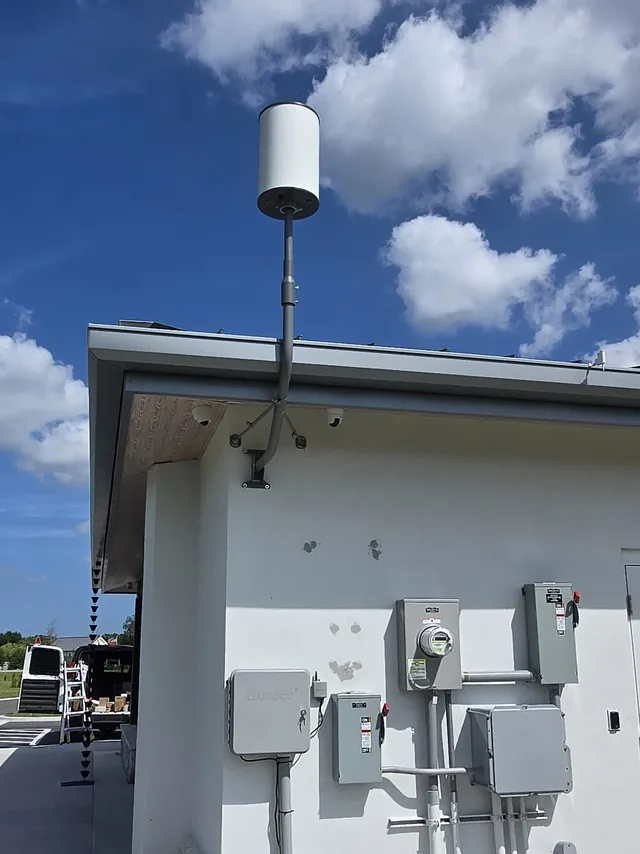
Where we work
We design and install commercial camera systems throughout the greater Orlando metro:
- Orlando
- Clermont
- Winter Garden
- Ocoee
- Windermere
- Four Corners
- Kissimmee
- Davenport
- Groveland
- Minneola
For the plazas and professional offices along US-27 and SR-50, see security cameras in Clermont. For Orlando’s multi-tenant buildings, hotels, clinics and plazas, see security cameras in Orlando.
On the Gulf side, security cameras in Tampa covers the distribution buildings along I-4 and I-75, the storefronts and clinics of the city, and the weather every exterior camera there has to survive.
SPCom Solutions is a service-area business — we come to your building, there is no showroom to visit. See the full service area
Get started today. Take the Technical Out of Technology.
Call and describe the property — the entrances, the lighting, the blind spots you already know about. We will assess the site and recommend the coverage it actually needs.