
Our services
Serving Clermont, Winter Garden & Greater Orlando
Structured Cabling
Cat5e, Cat6, Cat6a and fiber. New builds, expansions and cleaning up a rack somebody else left behind.
Structured cablingSecurity Cameras
Commercial camera systems specified for the site and the lighting it actually has, with remote viewing.
Security camerasAccess Control & Automation
Door access, readers and keypads, tied into the rest of the low-voltage system rather than bolted on.
Access controlBusiness WiFi
Coverage designed around the building's walls, racking and density — surveyed, not guessed.
Business WiFiPhone & VoIP Systems
Business phone systems including hosted VoIP, installed and supported by the same people who ran the cable.
Phone systemsIT Solutions
Day-to-day IT support for businesses that would rather call someone local than open a ticket.
IT solutionsFire Alarm Systems
Commercial fire alarm systems designed around the building and installed by the team that already runs its low-voltage.
Fire alarm systemsCustom Software
Internal tools and integrations that tie the systems we install into the way your business actually works.
Custom softwareBrands we install and support




One contractor for the whole stack
Most buildings end up with a cabling company, a camera company, a phone vendor and an IT provider — four numbers, and four people pointing at each other when something stops working. We do all of it, so when the cameras drop off the network there is one person responsible for finding out why.
FL License #ES12001608
Common questions about low-voltage and IT work
What is low voltage, and why is it a separate trade?
Low voltage describes the wiring that carries signal, and small amounts of power, rather than the building's electrical supply. Network cable, camera and access-control runs, sensor loops and the cabling behind a phone system are all low voltage; the circuits feeding lights and outlets are not.
The skills point in different directions, which is why it is its own trade. Electrical work is about delivering power safely. This work is about preserving a signal, where the enemy is interference, cable length, bend radius and the quality of each termination rather than current. The overlap that matters on site is physical: both trades are in the same walls and ceilings at the same time, and low-voltage cable run too close and parallel to electrical conductors picks up interference from them. Separation from power, and the route each cable takes, is part of the design rather than something settled on the day.
In what order do these systems get installed on a new build or a remodel?
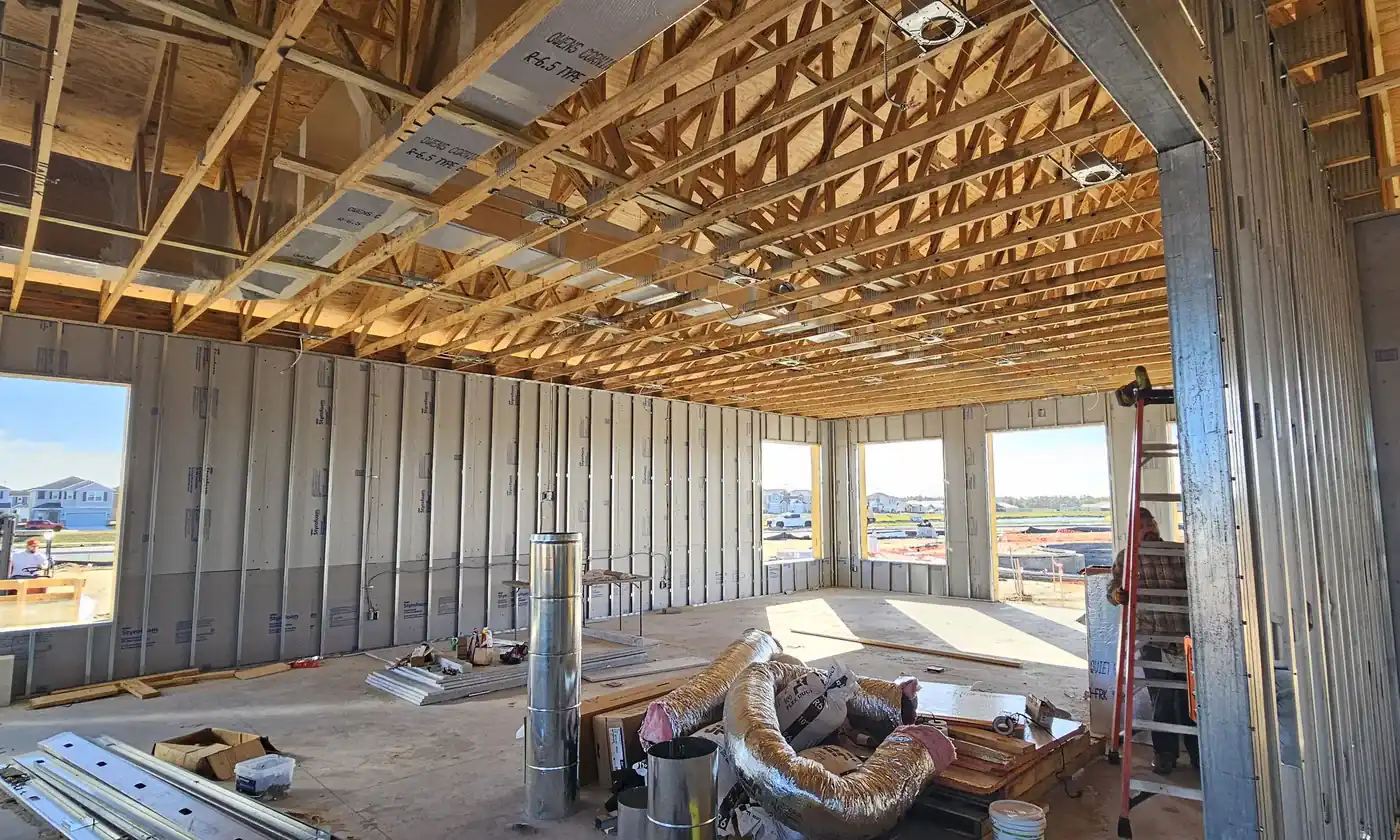
Roughly in the order the building gets closed up, which is why the decisions are worth making early. Cabling is first and is the one with a real deadline: every data, camera, access-control and sensor run has to be pulled while the walls are open, because afterwards the same cable costs several times as much to install and sometimes cannot be routed at all. That rough-in stage is also when back-boxes, conduit sleeves and the position of the equipment rack get fixed.
Device installation follows once ceilings and doors are in, since access points, cameras, readers, locks and handsets go onto cable that is already there. Network electronics and configuration come next, because the switches and the wireless have to work before anything depending on them can be tested, and phone and IT cutover comes last, usually scheduled around the move itself. For a remodel the implication runs the same way: the question worth answering before the drywall goes up is not only what you need now, but where you might want a camera, a door reader or a workstation in five years — the cable is cheap while the wall is open.
Where we work
SPCom Solutions is a service-area business covering the greater Orlando metro — Clermont, Winter Garden, Ocoee, Windermere, Orlando, Kissimmee, Four Corners, Davenport, Groveland and Minneola. We come to your site.